水上漂浮系统解决方案
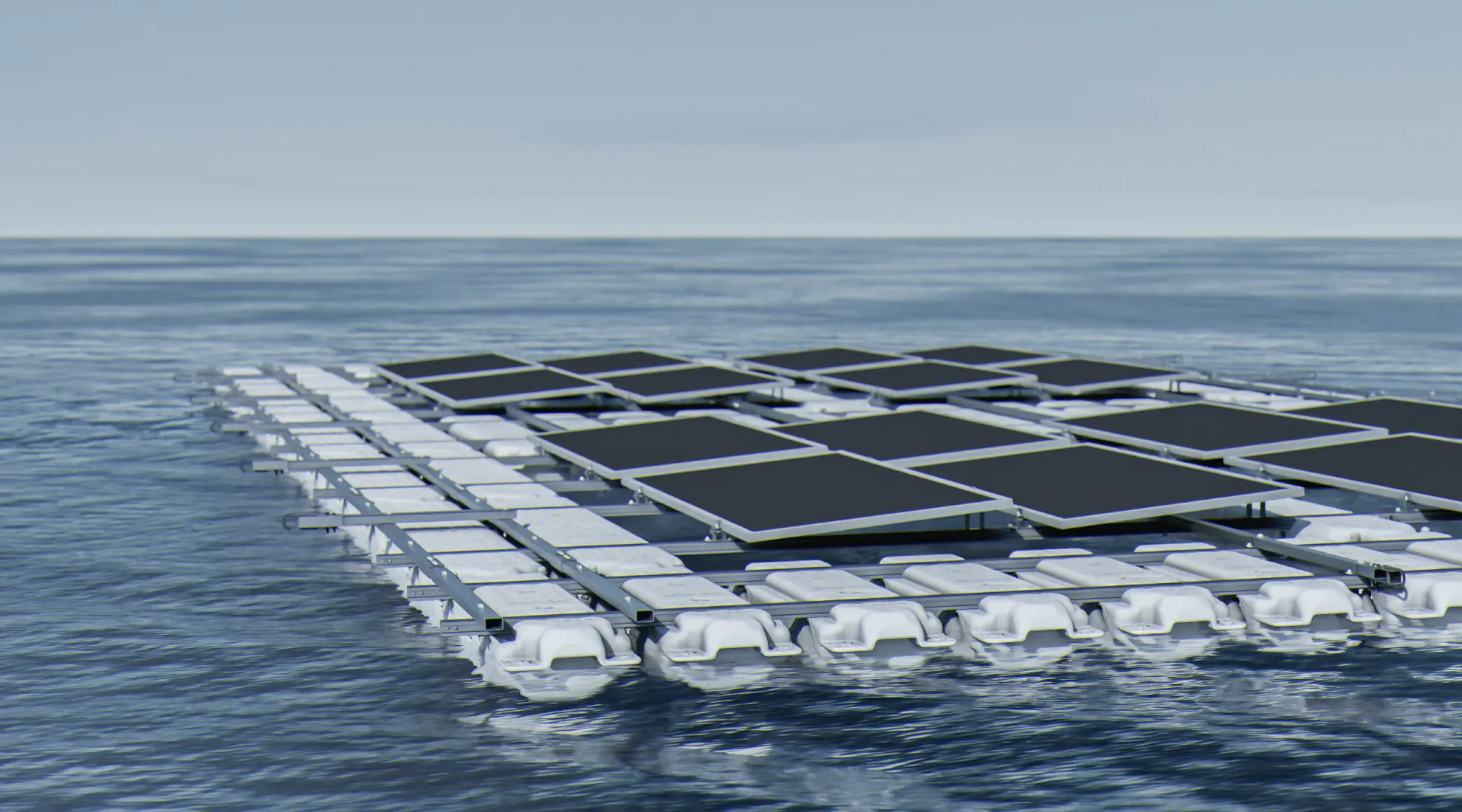
Floating PV System Architecture & Structural Design
Floating Platform & Mounting Framework
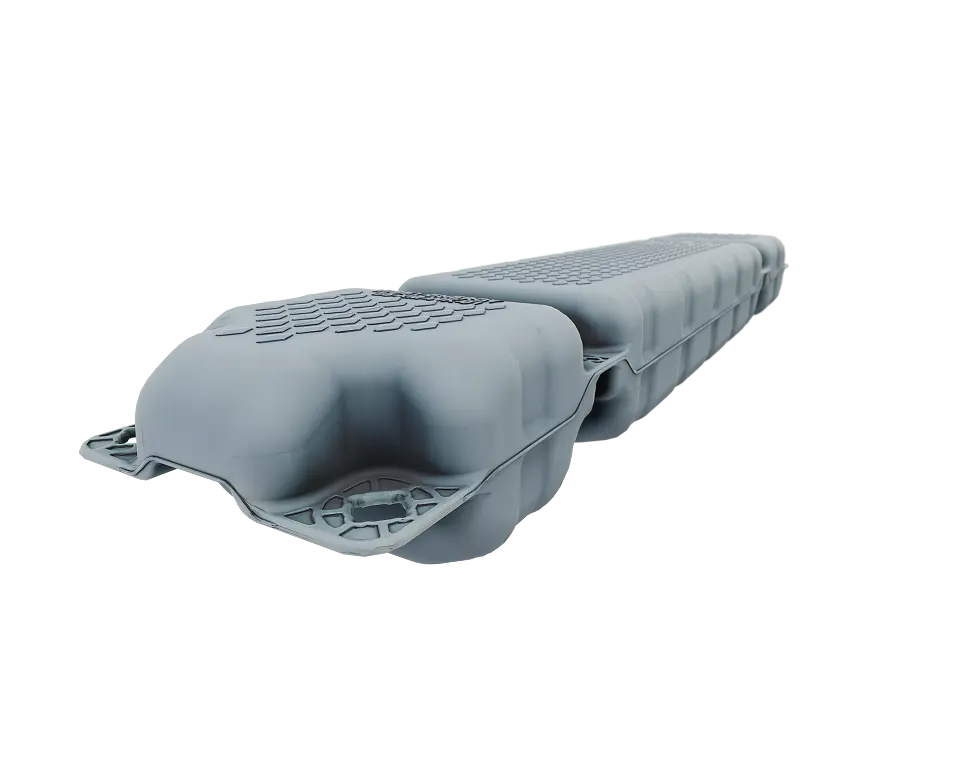
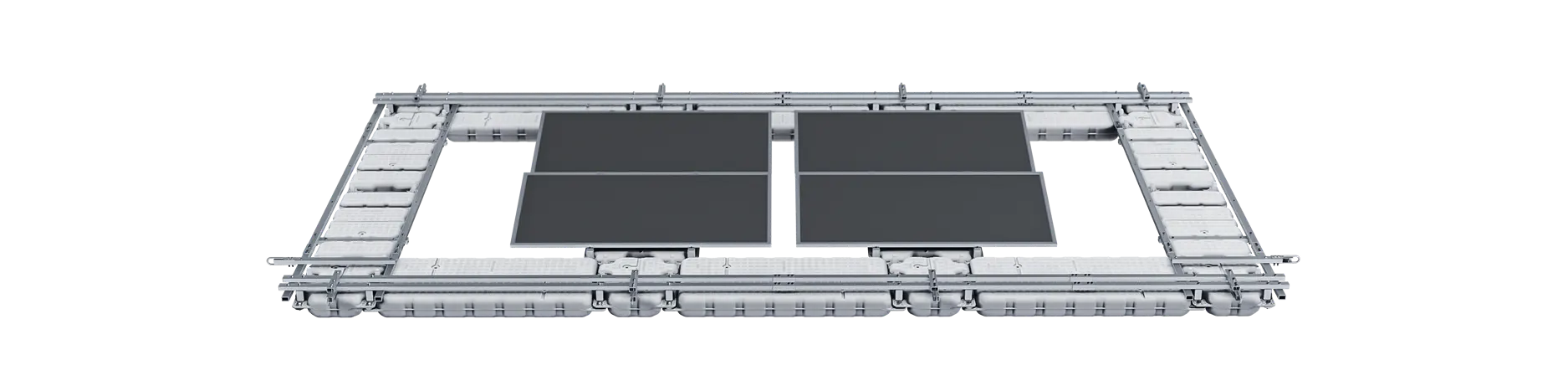
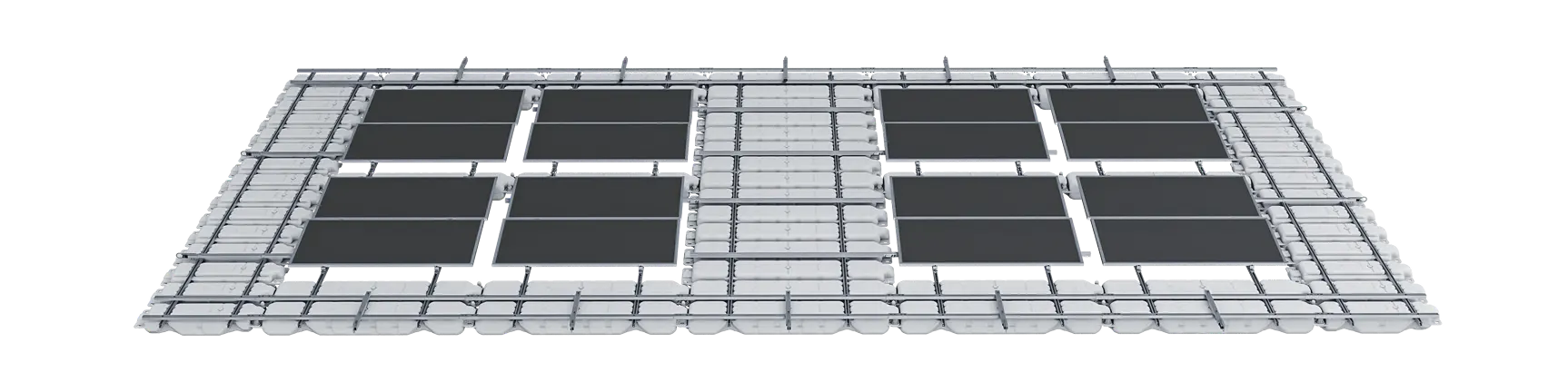
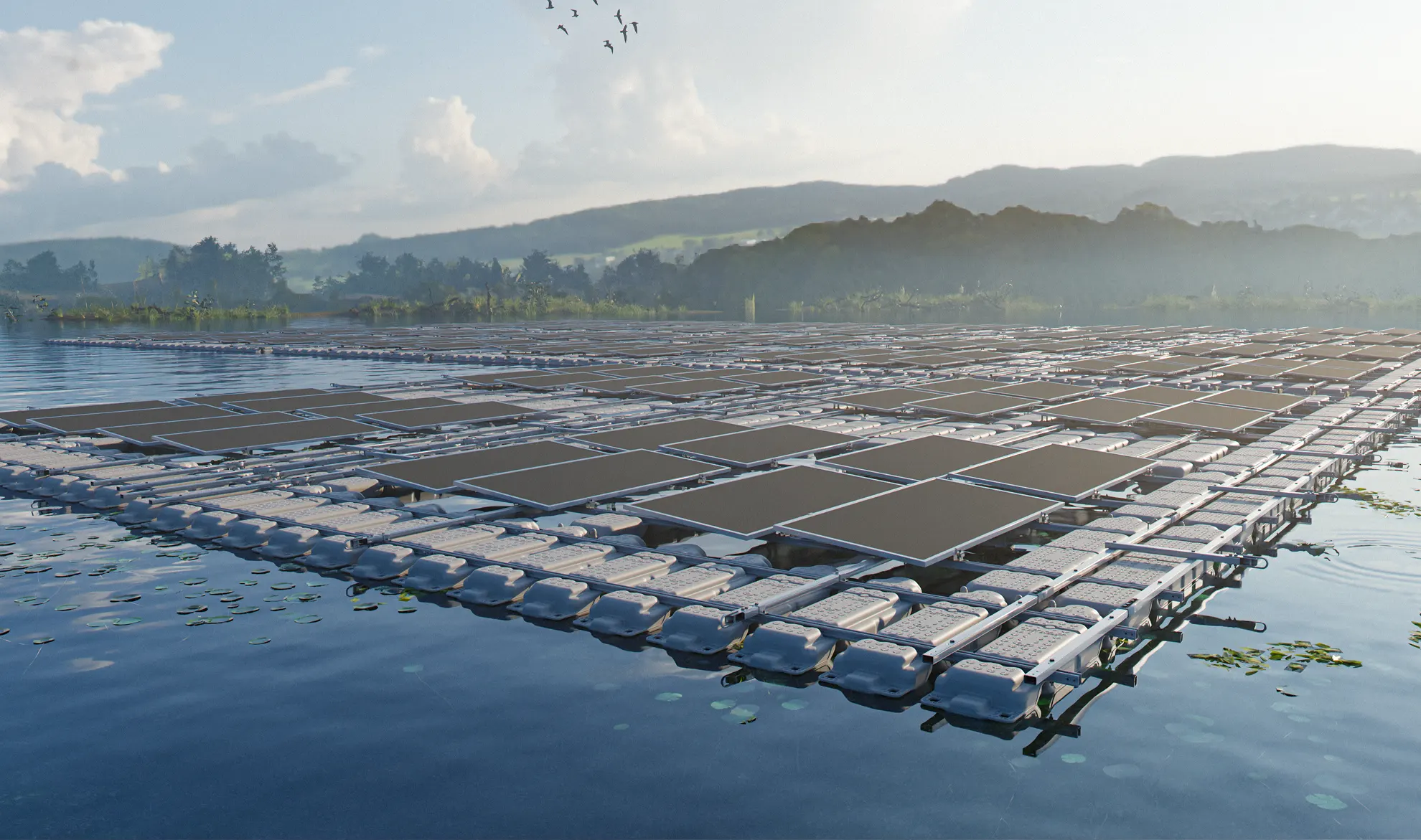
The foundation relies on high-strength, blow-molded HDPE floats. Compounded with UV stabilizers and anti-aging additives, the floats maintain structural integrity from –40 °C to 100 °C over a 25-year design life.
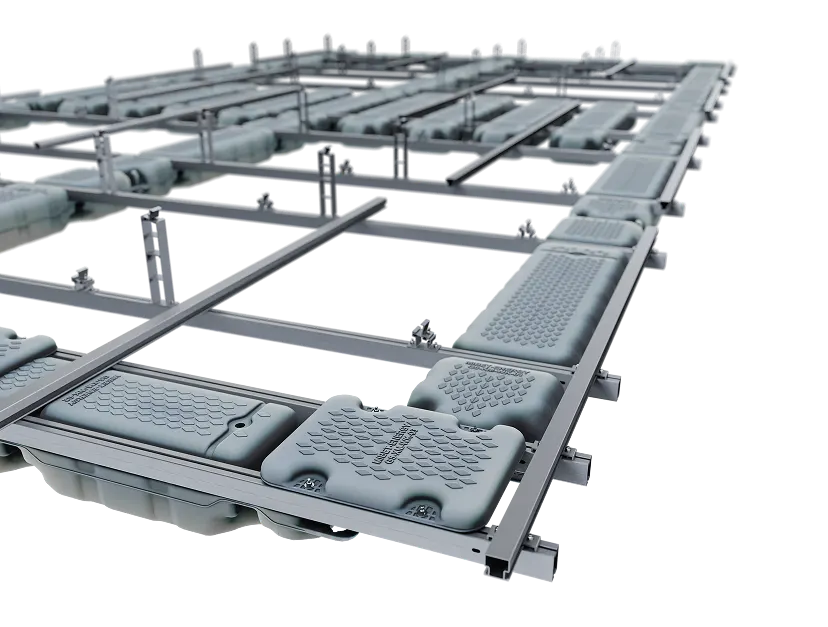
The mounting framework is attached to the floats and is made of either 6005-T5 anodized aluminum or corrosion-protected carbon steel. The entire floating system can handle wind loads of up to 60 m/s and snow loads of up to 0.5 kN/m².
To handle repeated cyclic loading from wave motion, the floats are held in place with interlocking lugs. These lugs are fastened with high-strength threaded polymer bolts and nuts. The metal framework, anchored to the floats via dedicated U-bolt kits, further distributes dynamic stress evenly across the array.
Mooring & Anchoring Systems
Keeping an array stable requires a site-specific mooring plan. We model local wind loads, wave spectra, and bathymetry to calculate the required holding capacity.
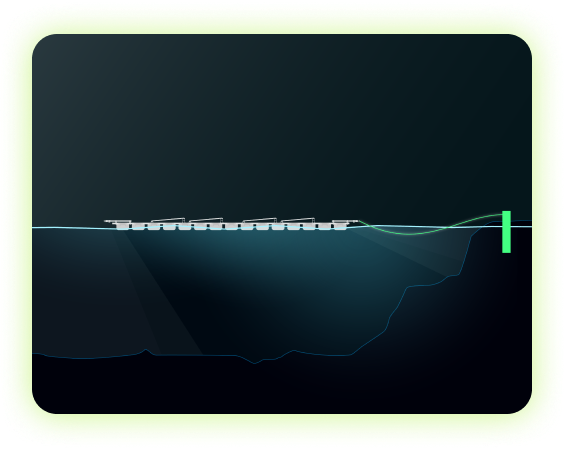
- Liner Protection in Ponds: Elastic mooring lines dampen wind-driven drift without compromising the pond liner.
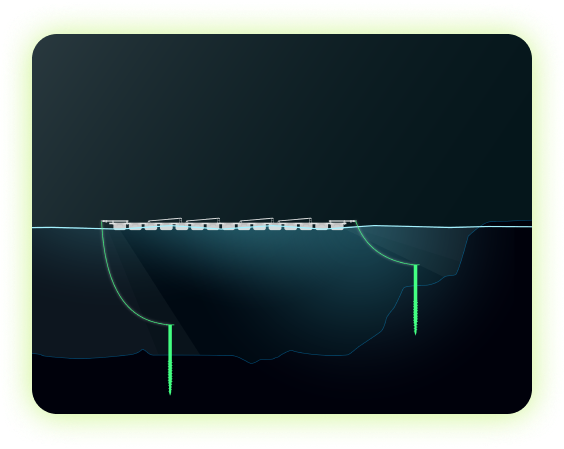
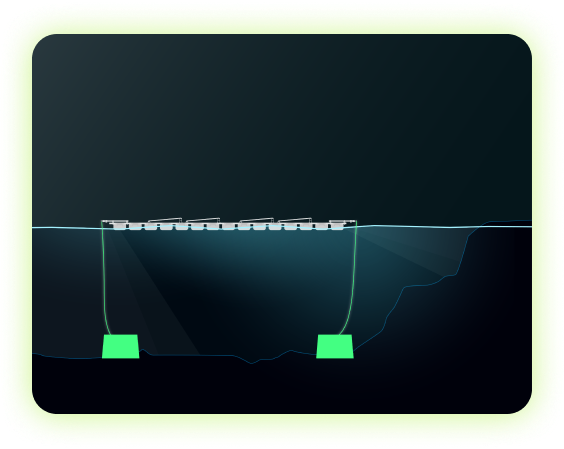
- Deep-Water Anchoring: The anchor type—gravity, helical, or driven pile—is dictated by site-specific geotechnical data.
- Extreme Water-Level Swings: Hydropower reservoirs frequently see seasonal swings of 20 meters or more. Hybrid configurations (e.g., chain-polyester-chain setups) accommodate this vertical translation while restricting horizontal drift within design tolerances.
Electrical Routing and O&M Accessibility
We design electrical routing and maintenance access into the initial array layout to ensure long-term asset availability. Dedicated floating pathways keep DC and AC lines safely above the waterline, shortening cable runs and reducing voltage drop.
Maintenance walkway floats sit every one or two module rows, giving crew and equipment a clear path across the array. Modular block designs and standard fasteners let technicians replace modules or floats in situ without dismantling adjacent structures or shutting down the plant.

全塑 HDPE 浮体

HDPE 浮体 + 金属支架

适应复杂多变的水域条件


- 当水位变化 < 1米 时:使用带有锚或沉石的缆绳固定。
- 当水位变化 < 3米 时:在缆绳与沉锚/沉石之间安装弹性弹簧。
- 当水位变化 > 3米 时:将卷扬机式缆绳连接到沉锚/沉石上。
Floating PV Systems Engineered for Long-Term Reliability
Certification & Testing
Our floating systems are TÜV and SGS certified for performance in harsh aquatic environments. Testing includes wind tunnel tests for wind speeds up to 60 m/s, Environmental Stress Cracking Resistance (ESCR) tests, and salt mist testing for corrosion resistance.
Engineering Support
Site conditions dictate FPV design requirements. Our engineers design array layouts and mooring solutions to accommodate site-specific variables—bathymetry profiles, seasonal water level fluctuations—and your project requirements.
Engineered for a 25-year operational life, our systems are backed by a 10-year product warranty.

材质环保
采用环保型HDPE浮筒,具备抗紫外线、抗老化、耐腐蚀等性能,耐候性优越。

排布灵活
模块化设计排布灵活易扩展,提高安装效率。

结构稳定
系统结构稳定抗风,抗波浪、抗台风。

运维便捷
多种锚固方案满足复杂水域安装,易于后期运维。

持久耐用
产品均通过风洞、盐雾等多重测试验证,保障长久运行。

兼容性强
组件兼容性强,适用大尺寸组件安装。
全球项目案例
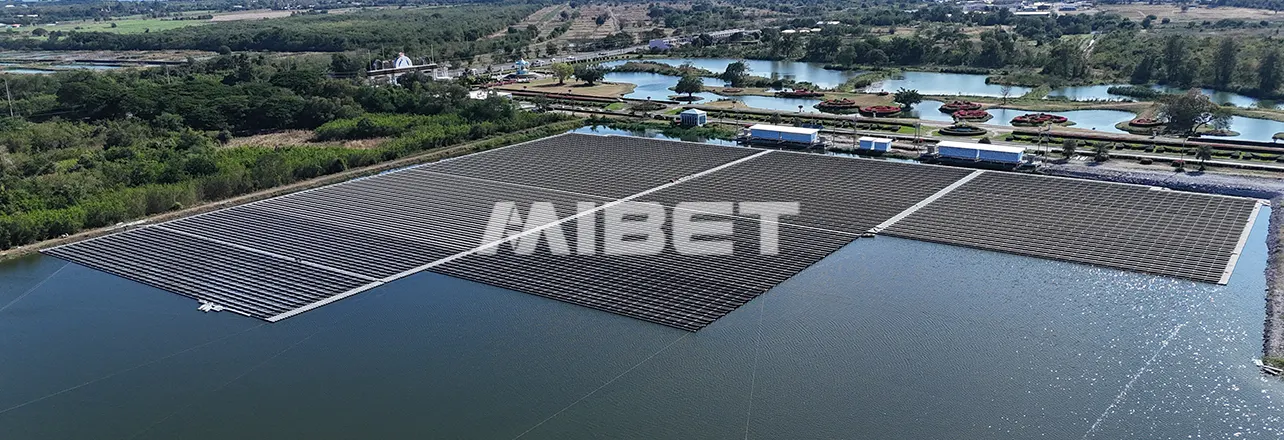
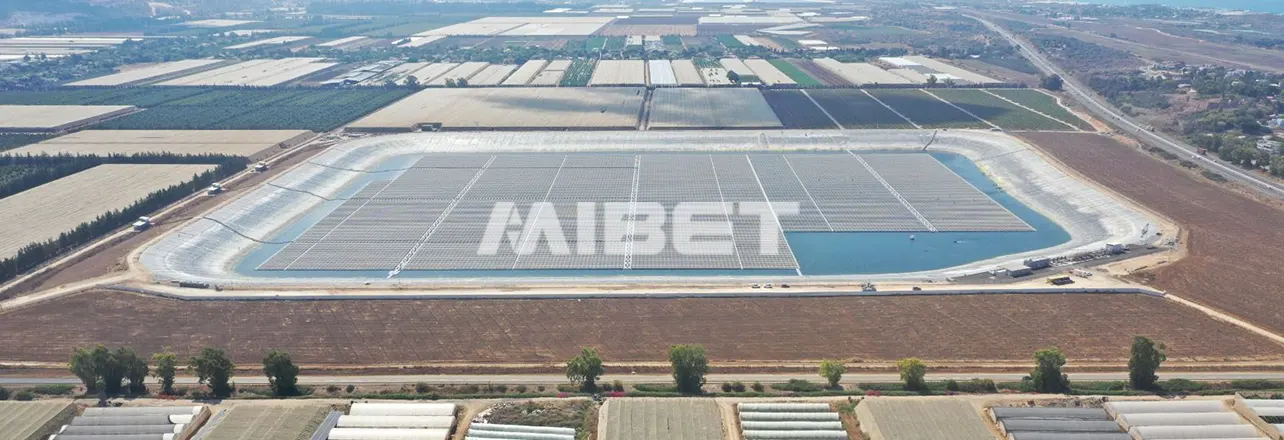
该系统广泛应用于亚洲、中东、大洋洲、非洲和欧洲的国家和地区。
16MW 水上漂浮光伏
中国湛江
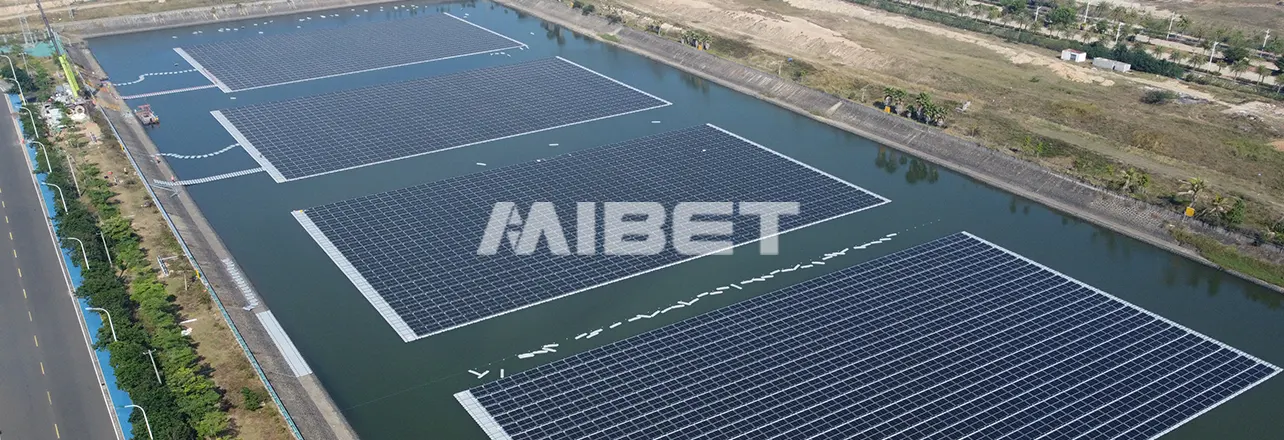


16MW 水上漂浮光伏
中国湛江